Synthetic Biology: Engineering the Future of Living Systems
Explore how synthetic biology combines genetics, molecular engineering and computational design to develop biological systems and innovative biotechnology applications.
Life is governed by molecular information, biochemical reactions and regulatory networks. Synthetic biology combines knowledge of these fundamental processes with engineering principles to investigate, modify and develop biological systems with defined functions.
By connecting genetics, computational design and experimental biology, this discipline is expanding the possibilities for medicine, sustainable manufacturing, environmental research and modern biotechnology.
1. Understanding the Foundations of Synthetic Biology
Synthetic biology is an interdisciplinary field that applies engineering concepts to biological systems. While traditional molecular biology investigates how living organisms function, synthetic biology also explores how biological components can be organized to produce desired characteristics.
Its foundations lie in the understanding that DNA stores genetic information, RNA participates in its expression and regulation, and proteins perform many of the functions necessary for cellular activity. These molecular relationships provide opportunities to investigate biological systems through design and experimental validation.
Synthetic biology connects the understanding of natural biological mechanisms with the engineering of biological functions.
2. Biological Components as Engineering Elements
Biological systems contain molecular components that perform specific regulatory or functional roles. Promoters influence transcription, regulatory proteins respond to molecular signals, and enzymes catalyze biochemical reactions.
Synthetic biology investigates how these components can work together within engineered biological systems. However, unlike electronic components, biological elements are influenced by their cellular environment, molecular interactions and metabolic conditions. Their behavior must therefore be evaluated within the intended biological context.
| Biological component | Primary function | Engineering relevance |
|---|---|---|
| Promoter | Transcription regulation | Gene expression control |
| Regulatory protein | Molecular regulation | Responsive biological behavior |
| Enzyme | Biochemical catalysis | Molecular production |
| Reporter protein | Measurable biological signal | Experimental monitoring |
Table 1. Representative molecular components and their relevance to biological engineering.
3. The Design–Build–Test–Learn Cycle
Synthetic biology frequently follows an iterative engineering framework known as the Design–Build–Test–Learn cycle, or DBTL. Researchers establish a biological objective, develop a candidate design, evaluate its experimental behavior and use the resulting information to refine subsequent investigations.
This cycle recognizes that biological systems cannot always be predicted accurately from molecular information alone. Experimental findings provide essential feedback about biological interactions, functional limitations and the suitability of a particular design.
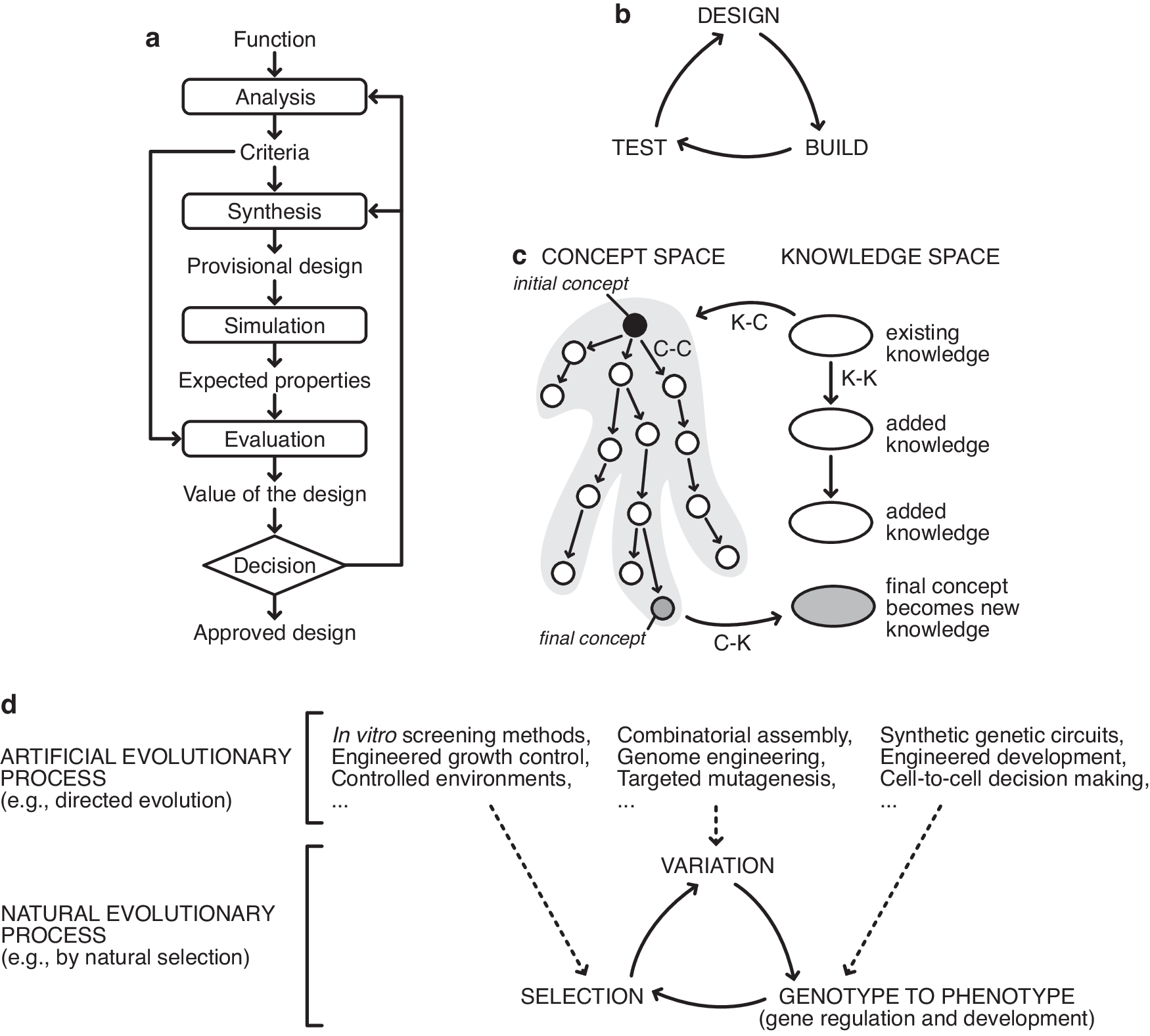
Source: Engineering is evolution: a perspective on design processes to engineer biology. Nature Communications (2024), original Figure 1.
4. Genetic Circuits and Programmable Biological Behavior
Genetic circuits are arrangements of molecular regulatory components that influence gene expression in response to biological conditions. They can exhibit behavior conceptually similar to switches, feedback mechanisms and information-processing systems.
A biological sensor, for example, may associate the recognition of a particular molecular signal with a measurable fluorescent response. Such systems illustrate how natural mechanisms of gene regulation can contribute to the development of analytical research tools.
The reliability of genetic circuits depends on their molecular specificity, stability and behavior within the intended biological environment.
5. Metabolic Engineering and Biological Production
Metabolism consists of interconnected biochemical reactions through which living organisms obtain energy, produce cellular components and transform molecules. Metabolic engineering investigates how these networks can be modified to influence the production of selected substances.
Engineered microorganisms can serve as biological production platforms for enzymes, pharmaceutical precursors, food ingredients and biomaterials. Yeast-based production of artemisinic acid, a precursor of the antimalarial compound artemisinin, is a landmark example of this connection between biological research and manufacturing.
Successful biomanufacturing depends not only on molecular production but also on process stability, resource consumption, purification requirements and economic feasibility.
Scientific reference: Paddon et al. High-level semi-synthetic production of the potent antimalarial artemisinin. Nature (2013).
6. Cell-Free Synthetic Biology
Many biological processes can be investigated outside intact living cells using molecular components derived from cellular systems or purified biochemical machinery. These approaches are collectively known as cell-free synthetic biology.
Cell-free technologies provide experimentally accessible environments for investigating protein synthesis, molecular interactions and biological regulation. Their applications include research reagent production, analytical biosensors and the characterization of biological functions without maintaining living cell populations.
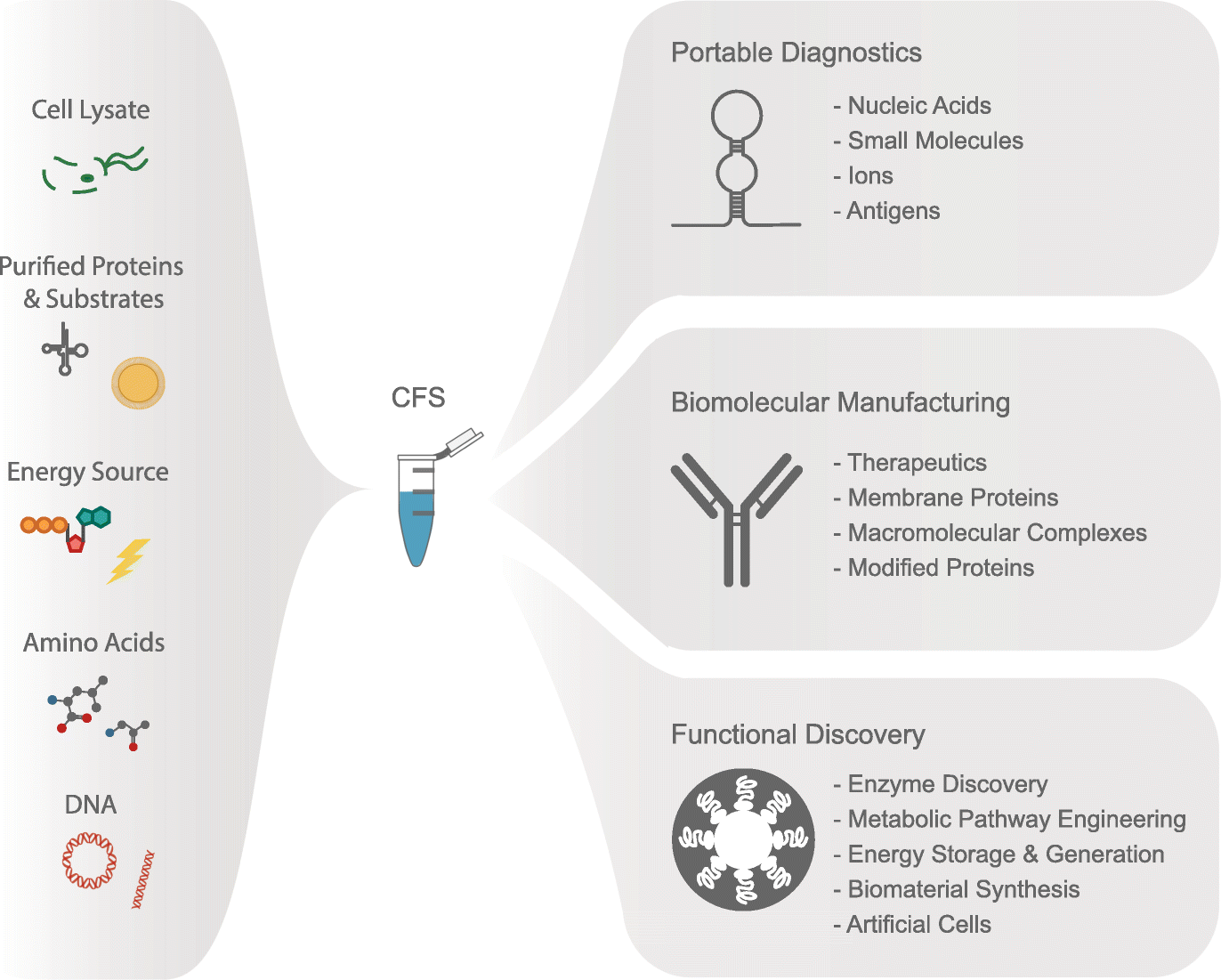
Source: Tinafar A, Jaenes K, Pardee K. Synthetic Biology Goes Cell-Free. BMC Biology, 17, 64 (2019), original Figure 1. CC BY 4.0. Unmodified figure.
| Characteristic | Cell-based systems | Cell-free systems |
|---|---|---|
| Biological environment | Living cells | External biochemical environment |
| Cell growth | Often relevant | Not required |
| Molecular accessibility | Influenced by cellular barriers | Direct access to reaction components |
| Main applications | Biomanufacturing and cellular research | Protein synthesis and biochemical research |
Table 2. Complementary characteristics of cell-based and cell-free biological engineering platforms.
7. Synthetic Biology in Medicine and Biomedical Research
Synthetic biology provides opportunities to investigate new approaches to disease research, molecular diagnostics and therapeutic biotechnology. Engineered biological systems can help researchers study cellular signaling, molecular recognition and interactions between biological components.
Applications include recombinant therapeutic proteins, engineered immune cell technologies and molecular biosensors. These developments illustrate how fundamental knowledge of biological regulation can support biomedical innovation.
Medical applications nevertheless require rigorous evaluation of biological function, safety, reproducibility and clinical effectiveness before their use can be established.
8. Environmental Biotechnology and Sustainable Manufacturing
Biological production systems offer alternative approaches to manufacturing materials and chemicals. Synthetic biology research explores the use of renewable resources, biological catalysts and engineered metabolic processes to produce industrially relevant compounds.
Environmental applications also include biosensors for monitoring pollutants and biological systems investigated for waste conversion. These technologies may contribute to more resource-efficient manufacturing, although environmental benefits must be demonstrated through appropriate life-cycle assessments.
Sustainable biotechnology requires consideration of energy consumption, raw materials, production efficiency and the environmental consequences of the complete manufacturing process.
9. Biofoundries, Automation and Responsible Biological Engineering
Modern synthetic biology increasingly integrates laboratory automation, computational modeling and structured experimental workflows. Biofoundries bring these capabilities together within research environments designed to support coordinated biological engineering.
A framework published in Nature Communications in 2025 describes how biological engineering projects can be organized into interconnected capabilities, workflows and individual operations. Such standardization can support collaboration and experimental reproducibility.

Source: Kim et al. Abstraction hierarchy to define biofoundry workflows and operations for interoperable synthetic biology research and applications. Nature Communications, 16, 6056 (2025). Original Figure 1.
Increasing biological engineering capabilities also reinforces the importance of biosafety, biosecurity, ethical oversight and responsible research practices. Scientific innovation must develop alongside appropriate assessment of potential biological and environmental consequences.
10. From Fundamental Biology to the Future of Biotechnology
Synthetic biology connects molecular knowledge with the development of biological systems, analytical technologies and manufacturing processes. Its integration with artificial intelligence, laboratory automation and advanced molecular analysis is expanding the possibilities for scientific discovery.
Future progress will depend on reliable biological materials, well-characterized reagents, standardized experimental methods and interdisciplinary expertise. The objective is not simply to modify living systems, but to understand and evaluate their behavior in ways that support meaningful scientific applications.
Synthetic biology transforms our understanding of life into new possibilities for biological innovation.
By connecting biological mechanisms with engineering principles, synthetic biology provides a foundation for modern biotechnology, sustainable production and future scientific discovery.