The Future of Scientific Research: How Emerging Technologies Are Transforming Discovery
Discover how artificial intelligence, genome engineering, single-cell analysis, spatial omics and laboratory automation are transforming scientific research and opening new frontiers in discovery.
Scientific discovery begins with the desire to understand how the natural world works. Throughout history, advances in observation, experimentation and analytical technologies have transformed the questions scientists can investigate. Today, the convergence of artificial intelligence, molecular engineering, advanced biological models and laboratory automation is creating new opportunities to explore the complexity of living systems.
The future of scientific research is not defined by a single breakthrough. It is shaped by the integration of complementary technologies that allow researchers to observe biological processes, investigate molecular mechanisms, test scientific hypotheses and translate fundamental knowledge into practical applications. Understanding this transformation requires examining how these technologies connect, from molecular prediction to integrated experimental discovery.
1. The Evolution of Scientific Research: From Observation to Intelligent Discovery
The development of modern science has always been closely associated with the evolution of research instruments. The microscope revealed structures invisible to the human eye, biochemical methods enabled the isolation and characterization of biological molecules, and molecular sequencing technologies provided access to the genetic information underlying living systems. Each technological advancement expanded the boundaries of scientific observation.
Contemporary research extends this progression through the integration of high-throughput analytical methods, advanced imaging systems and computational technologies. Scientists can investigate biological processes at different levels of organization, from individual molecules and cells to tissues, organs and entire biological systems.
Consider the investigation of a genetic disorder. Traditional approaches might focus on identifying a particular genetic mutation and evaluating its association with disease. Modern research can extend this investigation by examining the structure of the affected protein, measuring gene expression in individual cells, analyzing tissue organization and developing experimental models that reproduce selected aspects of the disorder.
This interconnected approach allows researchers to move beyond identifying associations toward investigating the mechanisms responsible for biological outcomes. However, collecting more information does not automatically produce better scientific understanding. Research questions, appropriate controls and critical interpretation remain essential.
Modern scientific research increasingly combines experimental observation, computational prediction and biological validation within interconnected research workflows. Technology expands scientific capability, while methodology determines the reliability of the resulting knowledge.
Among the technologies supporting this transformation, artificial intelligence has become particularly important because of its ability to investigate relationships within complex scientific information.
2. Artificial Intelligence and the Transformation of Molecular Discovery
Artificial intelligence in scientific research refers to computational approaches that can identify patterns, generate predictions and assist in interpreting complex datasets. Machine learning systems learn relationships from existing information, allowing them to support research tasks that would otherwise require extensive manual analysis or experimental screening.
One of the most important applications of artificial intelligence is structural biology. Proteins perform many biological functions through their three-dimensional structures and interactions with other molecules. Understanding these structures helps explain biological mechanisms, molecular recognition and the effects of genetic variation.
Experimental structural biology relies on techniques such as X-ray crystallography, nuclear magnetic resonance spectroscopy and cryo-electron microscopy. These methods provide experimentally derived structural information, but investigating every possible molecular interaction through experimental methods alone remains challenging.
In 2024, Abramson and colleagues introduced AlphaFold 3, a computational model that extends structure prediction to complexes containing different molecular components, including proteins, nucleic acids and small molecules. This research illustrates how artificial intelligence can support the investigation of biomolecular interactions and assist in identifying structures that warrant further experimental examination.
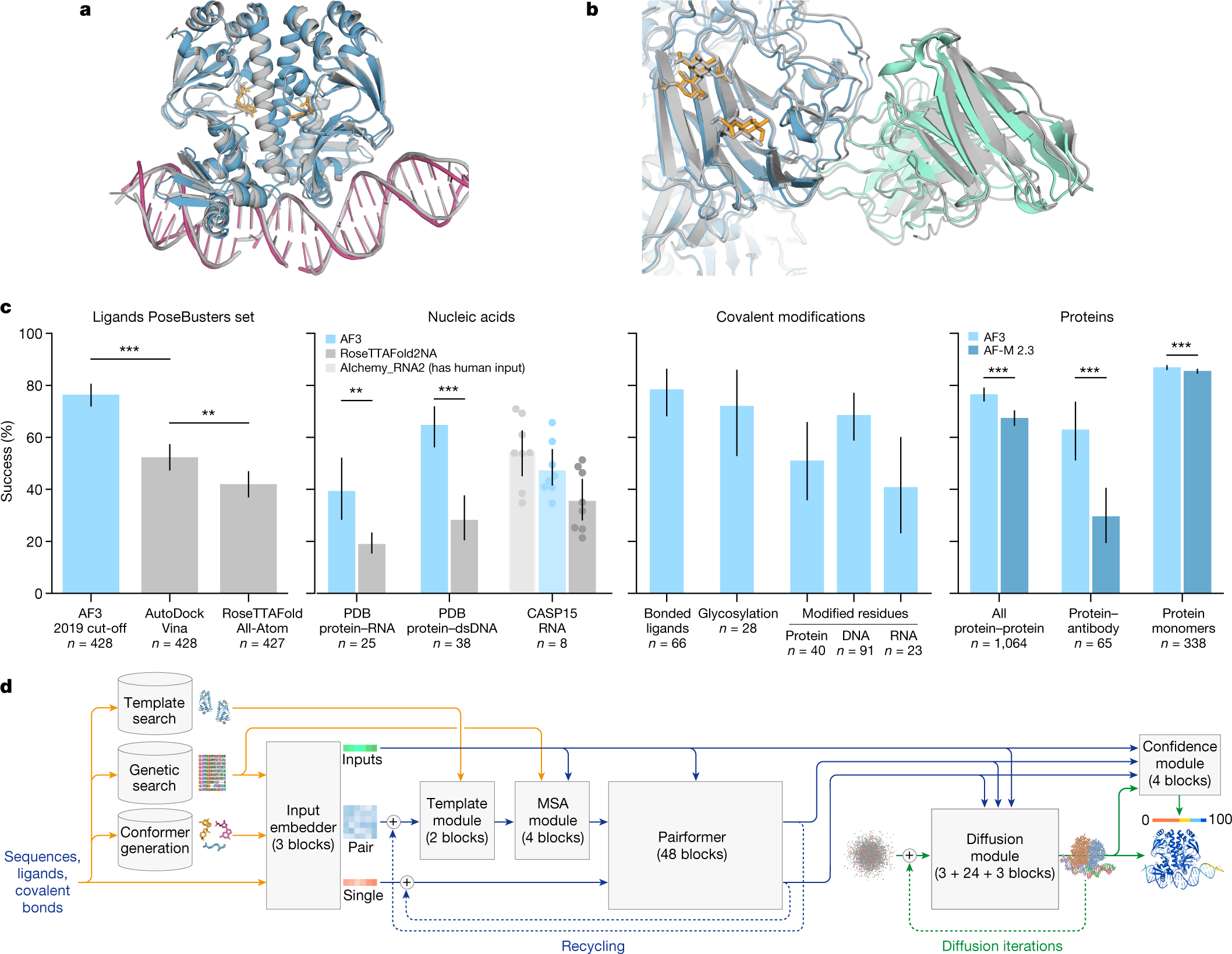
Source: Abramson et al., Nature, 630, 493–500 (2024), original Figure 1. Reproduced without modification under CC BY 4.0.
A practical example involves the investigation of a protein associated with a disease pathway. Computational predictions may help researchers identify structural regions potentially involved in molecular recognition. Subsequent biochemical and cellular experiments can determine whether the predicted interactions occur under relevant biological conditions.
Artificial intelligence therefore provides a bridge between existing scientific knowledge and new experimental questions. Nevertheless, predicted structures do not independently establish molecular function, binding affinity or therapeutic efficacy. The scientific importance of computational predictions depends on their integration with experimental evidence.
While artificial intelligence helps researchers explore molecular structures and relationships, genome engineering provides complementary opportunities to investigate the biological consequences of modifying genetic information.
3. Genome Engineering and the Development of Precision Biotechnology
Genetic information influences the development, organization and functioning of biological systems. However, identifying a genetic sequence associated with a biological characteristic does not necessarily explain how that sequence contributes to cellular function or disease.
Genome engineering addresses this challenge by enabling researchers to introduce targeted changes into genetic material. These technologies provide experimental approaches for examining gene function, investigating genetic variation and developing biological models with defined molecular characteristics.
CRISPR-based genome engineering technologies use molecular recognition mechanisms to direct editing or regulatory systems toward selected genetic regions. Different approaches have been developed to address distinct scientific objectives, ranging from targeted DNA cleavage to nucleotide conversion and gene expression regulation.
| Technology | Scientific principle | Research application |
|---|---|---|
| CRISPR-Cas9 | RNA-guided DNA cleavage | Gene function and targeted genomic modification |
| Base editing | Targeted nucleotide conversion | Investigation of selected genetic variants |
| Prime editing | RNA-guided sequence modification | Selected substitutions and small insertions or deletions |
| CRISPR interference | Targeted transcriptional repression | Gene regulation and functional genomics |
Table 1. Comparison of genome engineering approaches according to their underlying principles and representative research applications.
Prime editing, introduced by Anzalone and colleagues in 2019, demonstrated an approach for introducing selected genomic modifications without requiring a conventional DNA double-strand break or a separate donor DNA template. This development expanded the range of experimental strategies available for studying genetic variation.
For example, researchers investigating a mutation associated with altered cellular metabolism may compare biological models carrying different versions of the same genetic sequence. By examining relevant molecular and cellular characteristics, they can investigate whether the genetic difference contributes to the observed biological behavior.
The precision of genome engineering is not absolute. Editing outcomes depend on the selected system, biological context, delivery approach and target sequence. Research interpretation must consider unintended genomic changes, heterogeneous editing outcomes and potential effects on cellular function.
These considerations reveal an important limitation of studying genetic changes exclusively at the population level. Individual cells may respond differently to the same genetic modification, making technologies capable of investigating cellular heterogeneity increasingly valuable.
Scientific reference: Anzalone et al. Search-and-replace genome editing without double-strand breaks or donor DNA. Nature (2019).
4. Single-Cell Technologies and the Discovery of Biological Heterogeneity
Living tissues are composed of diverse populations of cells. Even cells belonging to the same general cell type may differ in gene expression, metabolic activity, developmental state and responses to their surrounding environment.
Traditional bulk molecular analysis measures biological material collected from multiple cells. Although this approach provides valuable information about overall molecular abundance, it may conceal differences between individual cellular populations.
Single-cell technologies address this limitation by enabling molecular investigation at the level of individual cells. Single-cell RNA sequencing, for example, characterizes RNA expression patterns in individual cells, allowing researchers to identify molecularly distinct populations within complex biological samples.
The biological significance of this approach becomes particularly clear in cancer research. A tumor is not necessarily composed of a uniform population of malignant cells. It may contain different tumor cell states together with immune cells, vascular cells, fibroblasts and other components of the surrounding microenvironment.
A bulk measurement may indicate that a particular gene is expressed within a tumor sample without revealing which cellular population contributes to that expression. Single-cell analysis can help associate expression patterns with distinct cellular populations, providing a more detailed perspective on biological organization.
Bulk molecular analysis
Provides averaged molecular measurements across a biological sample, supporting investigations of overall expression patterns and biological differences between samples.
Single-cell analysis
Investigates individual cellular expression profiles, revealing molecular heterogeneity and potentially identifying populations that are difficult to distinguish through bulk measurements.
Single-cell technologies have become important in developmental biology, immunology, neuroscience and regenerative medicine. They can contribute to the investigation of cellular differentiation, immune responses and biological changes associated with disease progression.
However, single-cell molecular profiles represent measurements rather than complete descriptions of cellular function. RNA abundance does not directly establish protein activity or metabolic behavior. Technical noise, incomplete molecular detection and computational uncertainty must also be considered.
Another important limitation arises when cells are removed from their original tissue environment. Researchers may learn which molecular characteristics distinguish individual cells while losing information about their original positions and neighboring cellular populations.
This limitation provides the scientific foundation for spatial omics, an emerging field that reconnects molecular measurements with biological architecture.
Scientific reference: Tang et al. mRNA-Seq whole-transcriptome analysis of a single cell. Nature Methods (2009).
5. Spatial Omics: Understanding Biology in Its Original Context
The behavior of a cell depends not only on its internal molecular characteristics but also on its position within a tissue. Neighboring cells, extracellular matrix components, nutrient availability and biochemical signals contribute to the local environment in which biological processes occur.
Spatial omics technologies combine molecular measurements with information about biological location. These approaches allow researchers to investigate the distribution of RNA molecules, proteins and other molecular features while retaining information about tissue architecture.
Spatial transcriptomics was established as an important research framework through the work of Ståhl and colleagues in 2016, demonstrating how gene expression measurements could be associated with positions within tissue sections. This approach provided a foundation for connecting molecular expression with tissue organization.
Consider an inflammatory tissue containing immune cells, structural cells and areas of tissue damage. Single-cell analysis can help identify distinct cellular populations, while spatial analysis can investigate where these populations are located and how their distributions relate to particular tissue regions.
This combined perspective is especially valuable when investigating biological processes involving communication between cells. Spatial proximity can help identify potential cellular interactions, although proximity alone does not establish functional communication or causality.
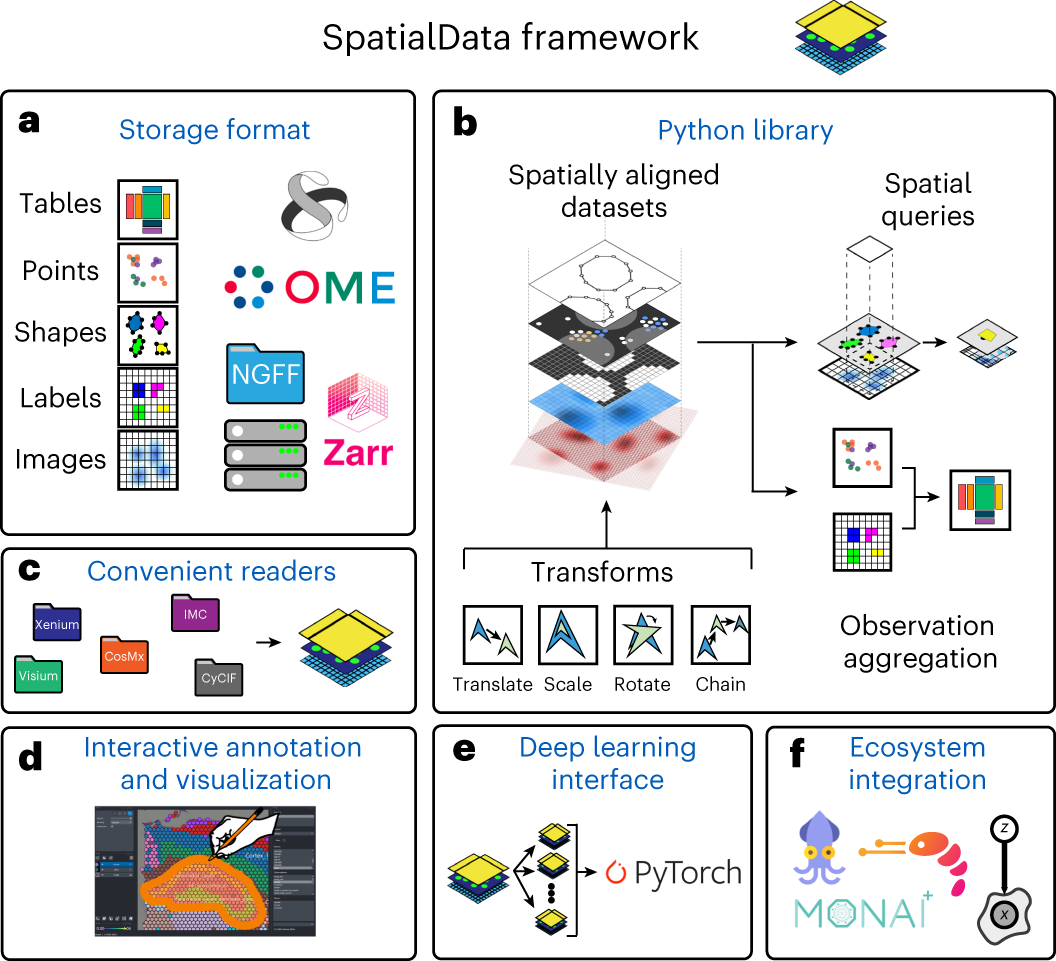
Source: Marconato et al. SpatialData: an open and universal data framework for spatial omics. Nature Methods, 22, 58–62 (2025), original Figure 1. Reproduced without modification under CC BY 4.0.
Spatial technologies introduce important analytical challenges. The quality of tissue preparation, measurement sensitivity, spatial resolution and computational alignment can influence the resulting biological interpretation.
Furthermore, a molecular map generally represents a biological state at the time of measurement. Understanding how cells respond to changing environmental conditions requires complementary experimental systems capable of reproducing selected tissue functions.
The relationship between cellular identity and tissue organization therefore creates a natural connection to advanced biological models, including organoids and microphysiological systems.
Scientific reference: Ståhl et al. Visualization and analysis of gene expression in tissue sections by spatial transcriptomics. Science (2016).
6. Organoids and Organ-on-Chip Technologies: Reconstructing Biological Complexity
Experimental models are fundamental to biological research because they allow scientists to investigate biological processes under defined conditions. Conventional cell culture remains an important research methodology, particularly for studying cellular responses and molecular mechanisms.
Nevertheless, cells maintained on flat culture surfaces do not reproduce every characteristic of their original tissue environment. Cellular architecture, mechanical influences, interactions between different cell populations and the distribution of nutrients may differ from those found within living organisms.
Organoids are three-dimensional cellular structures that reproduce selected organizational and functional characteristics of biological tissues. Depending on their cellular origin and developmental conditions, organoids can model aspects of intestinal, neural, hepatic, renal and other biological systems.
Organ-on-chip technologies approach the challenge from an engineering perspective. Microengineered devices allow researchers to investigate tissue functions within environments that can incorporate controlled fluid movement, physical interfaces and selected mechanical conditions.
The combination of these technologies provides opportunities to connect cellular self-organization with experimentally controlled tissue environments. For example, intestinal organoids integrated within microfluidic systems may support investigations of epithelial organization, barrier properties and interactions with environmental factors.
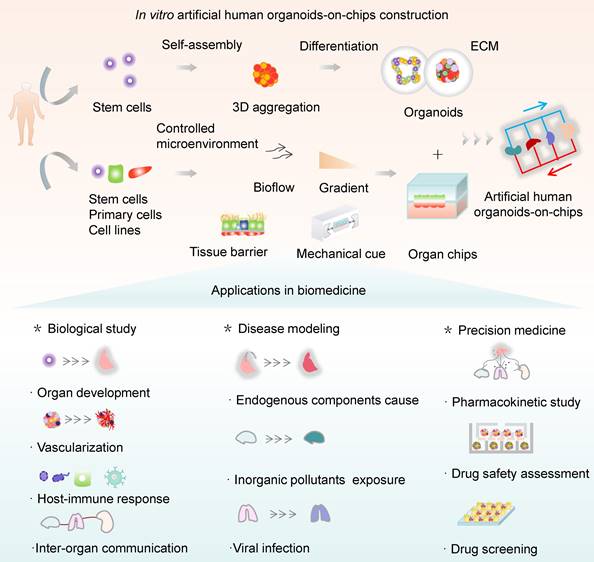
Source: Wang et al. Human organoids-on-chips for biomedical research and applications. Theranostics, 14(2), 788–818 (2024), original Figure 1. Reproduced without modification under CC BY 4.0.
| Experimental model | Main characteristic | Key limitation |
|---|---|---|
| 2D cell culture | Accessible cellular experimentation | Limited tissue-like architecture |
| 3D spheroids | Three-dimensional cellular aggregation | Variable internal nutrient and oxygen gradients |
| Organoids | Selected tissue-like organization and differentiation | Variability and incomplete physiological maturation |
| Organ-on-chip | Controlled microphysiological environment | Engineering complexity and standardization |
Table 2. Complementary characteristics and limitations of biological research models.
Recent research has examined different approaches for integrating organoids into microfluidic devices and analyzing their biological responses. These systems create additional opportunities for investigating tissue organization under controlled environmental conditions.

Source: Papamichail et al. Organoids-on-a-chip: microfluidic technology enables culture of organoids with enhanced tissue function and potential for disease modeling. Frontiers in Bioengineering and Biotechnology (2025), original Figure 1. Original illustration created in BioRender by Lito Papamichail (2025). Original illustration attribution.
Advanced biological models remain simplified representations of living systems. Their relevance depends on the biological characteristics they reproduce and the scientific question being investigated. An experimental model suitable for studying a tissue barrier may not necessarily be appropriate for investigating systemic metabolism or complex immune responses.
To understand the behavior of these experimental systems, researchers increasingly combine different types of molecular measurements, creating a connection between biological models and multi-omics analysis.
7. Multi-Omics and the Integration of Biological Information
Biological function emerges from interactions between genetic information, gene regulation, proteins, metabolites and environmental conditions. No individual molecular measurement can fully describe the complexity of these interconnected processes.
Genomics investigates genetic information and sequence variation, while transcriptomics examines RNA expression. Proteomics explores proteins and their molecular characteristics, and metabolomics investigates small molecules associated with biochemical activity.
Multi-omics research integrates information from complementary molecular measurement technologies to investigate relationships between different levels of biological organization.
| Omics discipline | Molecular focus | Scientific question |
|---|---|---|
| Genomics | DNA | What genetic information is present? |
| Epigenomics | Chromatin and epigenetic features | How is access to genetic information regulated? |
| Transcriptomics | RNA | Which genes are being expressed? |
| Proteomics | Proteins | Which proteins are present and how do they vary? |
| Metabolomics | Metabolites | What biochemical characteristics are observable? |
Table 3. Scientific perspectives provided by complementary molecular profiling disciplines.
Consider a biological model carrying a genetic variant associated with altered cellular metabolism. Genomic analysis can identify the variant, transcriptomic measurements can reveal differences in RNA expression, proteomic investigation can examine changes in protein abundance, and metabolomics can characterize associated biochemical differences.
Integrating these measurements may help researchers develop hypotheses concerning the relationship between genetic variation and cellular function. Such relationships can then be investigated through additional experimental studies.
Multi-omics analysis is particularly relevant to biomarker research, disease modeling, systems biology and biotechnology. Its scientific value arises from connecting different observations rather than simply increasing the number of measurements.
The integration of molecular datasets also introduces challenges. Different technologies have different analytical sensitivities, measurement scales and sources of technical variation. Associations identified across datasets require careful interpretation, especially when researchers attempt to distinguish causal mechanisms from statistical correlations.
As integrated molecular research becomes more complex, the efficient management of samples, analytical instruments and scientific information becomes increasingly important. Laboratory automation provides one approach to addressing this challenge.
Scientific reference: Hasin, Seldin and Lusis. Multi-omics approaches to disease. Genome Biology (2017).
8. Laboratory Automation and the Emergence of Intelligent Experimentation
Scientific experimentation involves multiple operations, including sample preparation, measurement, documentation and analytical interpretation. As research projects become more extensive, manually coordinating these operations can introduce challenges associated with consistency, throughput and traceability.
Laboratory automation uses instruments, robotic systems and software to perform selected experimental operations. Automated liquid handling, analytical instrumentation and sample management technologies can support research workflows by reducing repetitive manual operations and improving procedural consistency.
The development of intelligent experimentation extends automation beyond the execution of predefined operations. Computational systems can analyze experimental results and assist in selecting subsequent experiments based on defined research objectives. This approach is associated with the concept of self-driving laboratories.
A self-driving laboratory establishes an iterative relationship between experimental planning, automated measurements and computational evaluation. Instead of performing every possible experiment within a large research space, researchers may use computational strategies to prioritize informative experimental conditions.
CONCEPTUAL WORKFLOW
Research question
Define the scientific objective.
Experimental design
Select informative conditions.
Experimentation
Generate measurable evidence.
Data interpretation
Evaluate results and refine decisions.
Repeat the research cycle using the knowledge generated by preceding experiments.
In biotechnology, intelligent experimentation may support investigations involving large numbers of biological candidates or experimental conditions. Automated systems can help coordinate measurements, while computational models assist in identifying relationships within the resulting information.
Nevertheless, automation cannot compensate for an unsuitable experimental design or an unreliable analytical measurement. Instrument performance, reagent quality, sample characteristics and the validity of computational assumptions remain central to research quality.
The development of intelligent laboratories therefore reinforces the importance of scientific reproducibility and transparent documentation. Increasing the speed of experimentation is valuable only when the resulting evidence remains reliable.
9. Scientific Reproducibility, Open Science and Responsible Innovation
Scientific progress depends on the ability of researchers to evaluate evidence, examine experimental methods and investigate the reliability of scientific conclusions. As scientific technologies become increasingly complex, these fundamental principles become even more important.
Reproducibility and replicability are closely related concepts concerning the reliability of research. Reproducibility often refers to obtaining consistent computational results using the same data and analytical procedures, while replicability concerns the consistency of findings across independent studies addressing the same scientific question. Terminology can vary between disciplines.
In laboratory research, the characteristics of biological materials can influence experimental outcomes. Cell identity, sample handling, reagent composition, instrument performance and environmental conditions may all contribute to experimental variation.
For example, two laboratories investigating the same molecular pathway may obtain different observations if their biological models differ in genetic background, cellular differentiation state or experimental conditions. Transparent documentation helps researchers identify such differences and interpret their scientific significance.
The increasing use of computational technologies introduces additional requirements for documenting datasets, software versions, analytical assumptions and model evaluation procedures. Scientific conclusions should remain traceable to the evidence and methodologies from which they were derived.
THE FAIR DATA PRINCIPLES
Findable
Scientific information can be discovered through suitable identifiers and metadata.
Accessible
Information can be retrieved through defined access mechanisms.
Interoperable
Information can be combined using compatible formats and standards.
Reusable
Information is sufficiently documented for appropriate subsequent use.
The FAIR principles, introduced by Wilkinson and colleagues in 2016, provide a framework for improving scientific data stewardship. They emphasize the importance of organizing research information so that it can be discovered, accessed, integrated and reused under appropriate conditions.
FAIR information is not necessarily openly available without restrictions. Research datasets may require controlled access because of privacy, ethical, intellectual property or confidentiality considerations. Responsible scientific communication must recognize these requirements.
Artificial intelligence, genome engineering and advanced biological models also raise broader questions concerning research ethics, governance and responsible innovation. Scientific capabilities should develop alongside appropriate oversight and critical examination of their potential consequences.
These principles connect technological progress with the broader scientific objective of generating trustworthy knowledge that can support future research and biotechnology.
Scientific reference: Wilkinson et al. The FAIR Guiding Principles for scientific data management and stewardship. Scientific Data (2016).
10. The Convergence of Scientific Discovery and Modern Biotechnology
The future of scientific research emerges from the connections between technologies rather than their development in isolation. Artificial intelligence provides tools for investigating molecular relationships, genome engineering enables the examination of genetic function, and advanced analytical technologies reveal biological organization across different levels.
The integration of these capabilities can create research frameworks that connect molecular hypotheses with experimental biological evidence. Such approaches are particularly relevant to biotechnology, where scientific knowledge is applied to the development of biological tools, research models, analytical methods and potential therapeutic strategies.
Consider a research project investigating the molecular mechanisms of an inherited disorder. Computational modeling may help characterize the structure of a protein affected by genetic variation. Genome engineering can support the development of experimental models for studying that variation, while single-cell analysis and spatial technologies can investigate the resulting molecular and cellular changes.
Organoid or microphysiological systems may provide complementary environments for examining selected tissue functions. Multi-omics technologies can help connect observations across different molecular levels, and laboratory automation can support the coordination of experimental measurements.
This example illustrates how an initial scientific question can develop into a multidisciplinary research program. Each technology provides a different perspective, and the integration of those perspectives may contribute to a more comprehensive understanding of biological mechanisms.
| Research technology | Fundamental contribution | Biotechnology connection |
|---|---|---|
| Artificial intelligence | Computational prediction and pattern recognition | Molecular design and candidate prioritization |
| Genome engineering | Investigation of genetic function | Genetically characterized research models |
| Single-cell and spatial omics | Cellular identity and tissue organization | Biomarker and biological pathway research |
| Organoids and organ-on-chip | Experimental tissue-level investigation | Advanced preclinical research platforms |
| Multi-omics | Integrated molecular characterization | Systems-level biological research |
| Laboratory automation | Coordinated experimental measurements | Scalable and standardized research workflows |
Table 4. Relationships between fundamental scientific technologies and representative modern biotechnology applications.
The development of these interconnected research approaches also depends on reliable scientific infrastructure. Biological materials, laboratory reagents, analytical instruments, experimental documentation and computational resources collectively support the generation of scientific evidence.
Scientific innovation should therefore be understood as a relationship between knowledge, technology and experimental practice. Advanced instruments and computational systems extend the possibilities of research, but their scientific significance ultimately depends on the quality of experimental design, the reliability of measurements and the interpretation of results.
FROM FUNDAMENTAL SCIENCE TO FUTURE DISCOVERY
The future of science is not simply the development of more powerful technologies, but the ability to connect those technologies with meaningful scientific questions.
By integrating molecular knowledge, computational intelligence, biological experimentation and responsible research practices, modern biotechnology continues to expand the possibilities for understanding living systems. The next generation of scientific discoveries will depend on this convergence of disciplines, supported by reliable evidence and a commitment to scientific integrity.
Scientific Community explores this evolving landscape of scientific research, connecting fundamental knowledge with the technologies and research resources shaping future discovery.
Explore more scientific perspectives through Scientific Insights or discover scientific research tools and materials in the Scientific Community product catalogue.